
 admin
admin
The mysterious linguistic term incfidelibus has emerged across contemporary digital discussions, sparking curiosity among linguists, historians, and online researchers worldwide. While at first glance it closely resembles classical Latin terminology, a closer analysis reveals complex layers of digital evolution, transcription anomalies, and deep semantic ties to classical ideas of trust and fidelity. Unraveling the exact nature of this keyword requires exploring ancient linguistic roots alongside modern search behaviors. By analyzing how rare terms spread through online ecosystems, researchers gain invaluable insight into language adaptation. Ultimately, exploring incfidelibus offers a fascinating window into how historical roots interact with modern digital communication platforms today.
Quick Bio
| Attribute | Details |
| Keyword | Incfidelibus |
| Linguistic Root | Latin (Infidelis / Fides) |
| Primary Meaning | Unfaithful, disloyal, or lacking belief |
| Grammatical Case | Dative / Ablative Plural (Variant Form) |
| Field of Interest | Etymology, Digital Linguistics, Philology |
| Related Term | Infidelibus |
Etymology and Linguistic Origins of Incfidelibus
To understand the core origin of incfidelibus, one must examine classical Latin roots related to faith, devotion, and structural loyalty within ancient vocabularies. Classical Latin heavily relied on the base word fides, which signified trust, confidence, and mutual respect between individuals or communities. Adding negative prefixes transformed these words to indicate broken trust, giving rise to forms that described disloyalty or betrayal in various contexts. The word incfidelibus directly reflects these ancient root dynamics, standing as a modern digital evolution of traditional vocabulary. Examining these linguistic building blocks helps clarify how ancient classical structures continue influencing specialized terms used across digital platforms.
Grammatical Breakdown and Structural Analysis
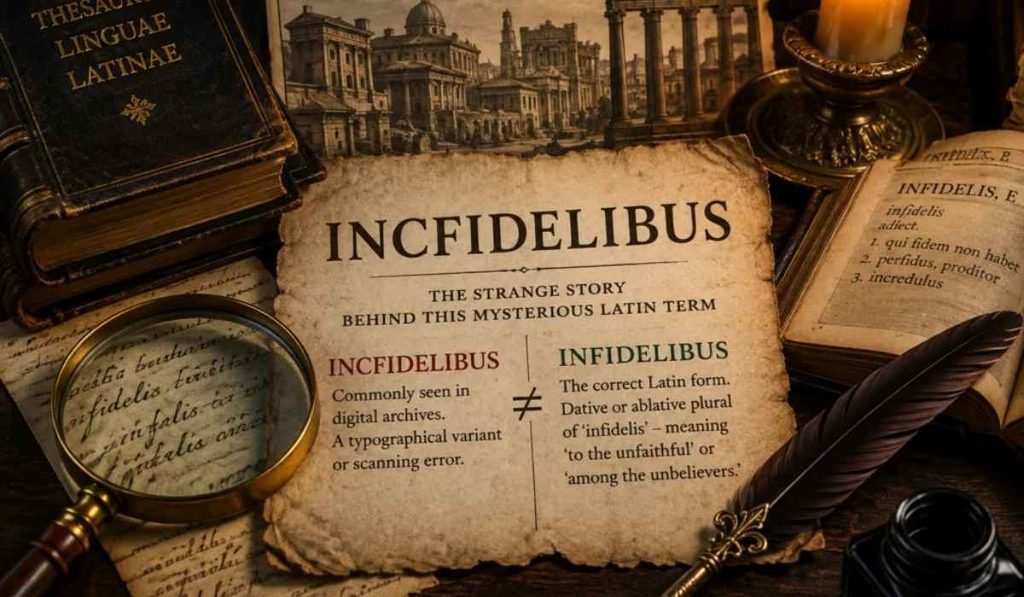
Analyzing the internal grammatical structure of incfidelibus provides essential clues regarding how this specialized term functions within classical and modern framework contexts. In traditional Latin grammar, the suffix -ibus denotes either the dative or ablative plural case, meaning “to,” “for,” or “with” specific groups. When attached to adjectives denoting unfaithfulness, the entire phrase translates to concepts surrounding or directed toward the unfaithful or unbelieving. The structural composition of incfidelibus highlights these distinct grammatical markers, offering philologists clear evidence of its traditional roots. Such detailed morphological evaluation remains crucial for accurately translating and contextually applying complex historical language variations.
Classical Latin Comparison Infidelibus vs Incfidelibus
Comparing standard dictionary entries reveals key differences between the standard Latin term infidelibus and the unique online spelling variation incfidelibus found today. Classical Latin manuscripts consistently utilize infidelibus without the extra internal consonant, establishing it as the recognized standard across academic literature. The variant incfidelibus likely originated through typographical variations, optical character recognition errors, or digital transcription shifts during archive digitization projects. Identifying these subtle orthographic distinctions allows scholars to differentiate between recognized classical prose and modern digital spelling adaptations. Consequently, comparing both forms ensures greater accuracy when evaluating historical texts and digital search trends.
Historical Usage in Classical Manuscripts

Throughout classical antiquity and medieval literature, terms related to incfidelibus appeared frequently in discussions concerning philosophy, ethics, and civil loyalty. Writers used these words to describe individuals who breached treaties, abandoned sacred oaths, or displayed disloyalty toward their respective city-states or governing bodies. The concept represented by incfidelibus was not merely romantic but extended broadly to political alliances and community obligations. Historical manuscripts reveal how integral concepts of fidelity were to maintaining societal order across diverse ancient civilizations. Examining these historical texts helps contemporary readers appreciate the deep cultural significance embedded within traditional vocabulary.
Religious and Theological Contexts
In early Christian writings and theological treatises, vocabulary connected to incfidelibus carried specific contextual meanings regarding belief systems and religious affiliation. Scholars and theologians frequently employed related terms to distinguish between faithful believers and those outside the designated faith community. In these specific texts, incfidelibus reflected religious standing rather than personal malice or individual moral failure. Understanding this theological context prevents modern readers from misinterpreting ancient religious documents through contemporary personal definitions. Ultimately, theological literature provides crucial historical framework for analyzing how vocabulary surrounding faith and belief evolved over many centuries.
Historical Transcription Errors and OCR Evolution

The widespread digitization of historical archives has introduced many unique spelling variations, including the modern appearance of incfidelibus across digital text databases. When scanning aging paper manuscripts, automated Optical Character Recognition software sometimes misinterprets faint ink marks or stylized medieval scripts, inserting extraneous characters into recognized words. The digital keyword incfidelibus represents a classic example of how machine reading variations enter modern search indexes and digital literature. Tracking these technological artifacts helps digital archivists correct textual errors while preserving accurate historical records for future academic research. Thus, OCR evolution plays a major role in shaping modern web terminology.
Modern Digital Trends Surrounding Incfidelibus
In recent years, internet search algorithms have documented a notable rise in queries surrounding incfidelibus across various online platforms and search engines. Curiosity-driven users frequently search for rare Latin phrases to uncover hidden meanings, decipher unique usernames, or verify digital references. The presence of incfidelibus within search trends illustrates how mysterious words can quickly capture public interest across online communities. Digital marketers and content creators observe these keyword patterns to better understand how niche terms gain popularity online. Analyzing these modern search dynamics provides valuable data regarding user curiosity and information discovery processes.
Cultural Interpretations of Trust and Loyalty
Beyond pure linguistics, the broader concepts tied to incfidelibus touch upon fundamental human values regarding trust, interpersonal loyalty, and moral integrity. Cultures worldwide have long examined the emotional and social impacts of broken promises across literature, folklore, and philosophy. The word incfidelibus serves as a symbolic focal point for discussions about personal commitment and the consequences of betrayal. Reflecting on these timeless themes encourages individuals to evaluate their own relationships and moral principles thoughtfully. Therefore, exploring this term opens broader conversations about human connection and societal expectations across different eras.
Literary Symbolism of Unfaithfulness
Authors throughout history have utilized themes aligned with incfidelibus to construct compelling narrative conflicts and complex character dynamics in classic literature. Stories centered on betrayal, broken trust, and heroic redemption often rely on the emotional weight associated with disloyalty. Incorporating concepts like incfidelibus adds dramatic tension, forcing characters to navigate difficult moral choices and personal dilemmas. Literary critics frequently analyze these motifs to understand how storytellers explore human flaws and ethical boundaries within prose. Consequently, the symbolic representation of unfaithfulness remains one of the most enduring elements in creative storytelling.
Philosophical Perspectives on Fidelity
Philosophers from ancient Greece through the modern era have rigorously analyzed the ethical implications surrounding fidelity, duty, and the essence of incfidelibus in human conduct. Moral philosophy often questions whether loyalty is an absolute duty or a conditional virtue dependent upon external circumstances and actions. Engaging with ideas related to incfidelibus allows thinkers to examine what constitutes a breach of trust in contractual, social, and personal domains. These philosophical inquiries encourage critical thinking about ethics, justice, and personal responsibility within complex societal structures. Thus, philosophical discourse provides a rich framework for evaluating human commitments.
Societal Impact of Broken Promises
The practical consequences of broken faith, symbolically captured by incfidelibus, extend far beyond individual relationships into economic, political, and institutional spheres. When trust breaks down within a community or organization, cooperation becomes difficult, leading to social fragmentation and conflict. Addressing the dynamics represented by incfidelibus helps sociologists analyze how societies build resilience and restore institutional integrity after experiencing systemic betrayals. Understanding these social mechanics is essential for creating stronger, more transparent civic institutions capable of enduring crisis. Ultimately, institutional trust remains a cornerstone of stable and thriving human societies.
Linguistic Evolution in the Digital Era
The digital age has fundamentally changed how language evolves, allowing obscure terms like incfidelibus to circulate globally at unprecedented speeds. Social media networks, online forums, and digital encyclopedias facilitate the rapid exchange and reshaping of specialized vocabulary across international boundaries. The keyword incfidelibus demonstrates how digital communication breathes new life into archaic root words and transcription variants alike. Linguists studying online communication patterns closely monitor these trends to document real-time shifts in human language usage. Observing these digital linguistic transformations offers unique insights into the future of global human communication.
Common Misconceptions About Incfidelibus
Numerous online myths and misunderstandings have emerged regarding the precise definition, origin, and practical usage of incfidelibus in contemporary text. A frequent misconception is that the word strictly refers to romantic infidelity, ignoring its much broader historical and civic applications. Another common error involves treating incfidelibus as a newly invented modern slang word rather than a term grounded in classical Latin roots and transcription history. Correcting these widespread misconceptions ensures that readers gain an accurate, well-rounded understanding of the keyword’s true heritage. Clear linguistic education remains the best tool for dispelling online misinformation.
Comparative Analysis with Modern Terminology
Comparing historical terms like incfidelibus with modern English vocabulary highlights how linguistic expressions of trust and disloyalty have changed over time. Contemporary English words such as “infidelity,” “disloyalty,” and “perfidy” directly inherit their core meanings from ancient Latin vocabulary foundations. However, while modern terms often focus heavily on personal relationships, incfidelibus originally carried broader institutional and philosophical weight. Conducting comparative linguistic analysis enables researchers to trace semantic shifts across centuries of human language development. Understanding these structural connections deepens our appreciation for the historical evolution of modern languages.
Strategic SEO Analysis for Niche Keywords
From a digital marketing perspective, analyzing niche keywords like incfidelibus provides critical insights into search engine optimization strategies and user search behavior. Low-competition, highly specific keywords allow content creators to target specialized search queries with high precision and relevance. Incorporating incfidelibus naturally within structured, informative content helps search algorithms index pages effectively while delivering real value to curious readers. SEO specialists utilize these detailed keyword strategies to build topical authority and improve organic visibility across competitive search results. Consequently, understanding niche SEO dynamics is vital for effective online publishing.
Cyber Security and Brand Identity Contexts
Interestingly, unique letter combinations like incfidelibus occasionally appear within cybersecurity discussions, domain name registrations, and online brand identity contexts. Web developers and security analysts often track unique, non-standard terms used as digital handles, project codenames, or security test parameters. The distinct nature of incfidelibus makes it an intriguing candidate for specialized online identifiers or creative digital projects requiring unique terminology. Monitoring how rare terms are deployed across web architecture helps professionals maintain digital security and protect brand assets online. Thus, rare keywords hold practical relevance in modern tech environments.
Psychological Dimensions of Betrayal
Psychologists studying human behavior often explore the profound emotional trauma and cognitive disruption associated with experiences mirroring the themes of incfidelibus in personal life. Experiencing severe betrayal from a trusted partner or institution can shatter an individual’s worldview, leading to anxiety, mistrust, and emotional distress. Processing concepts surrounding incfidelibus allows mental health professionals to develop effective therapeutic strategies for rebuilding self-trust and emotional resilience after trauma. Understanding the psychological mechanics of trust helps individuals navigate complex interpersonal relationships more safely and constructively. Psychological health depends heavily on restoring security after broken faith.
Educational Importance of Etymology
Teaching students about word origins, including complex examples like incfidelibus, plays a crucial role in building advanced vocabulary and critical reading skills. Understanding Latin roots empowers learners to decipher unfamiliar words across medical, legal, scientific, and literary disciplines with greater confidence. Analyzing the background of incfidelibus teaches students how language, technology, and historical manuscript copying interact over long periods. Educational programs that emphasize etymology foster deeper analytical thinking and language appreciation among students of all ages. Ultimately, etymological study remains a foundational pillar of comprehensive literacy education worldwide.
Future Outlook for Digital Philology
As artificial intelligence and advanced machine learning algorithms continue transforming linguistic research, the study of terms like incfidelibus will become increasingly sophisticated. Advanced digital philology tools can analyze millions of historical texts simultaneously, instantly identifying transcription errors, spelling variants, and semantic shifts across centuries. Researching keywords like incfidelibus illustrates the immense potential of combining classical humanities with modern computational power to preserve human knowledge. As digital archives expand globally, future scholars will gain unprecedented access to historical language data, enriching our collective understanding of human culture.
Final Synthesis and Comprehensive Conclusion
In summary, examining the multifaceted nature of incfidelibus reveals a fascinating intersection of classical Latin history, philological study, and modern digital technology. From its ancient roots in concepts of faith and loyalty to its contemporary appearance in internet search trends, the word carries rich educational value. Understanding the subtle distinctions between standard Latin forms and digital variants prevents confusion while fostering a deeper appreciation for language evolution. Whether approached through ethics, literature, linguistics, or search engine optimization, exploring this keyword offers valuable insights into human communication. Language remains a dynamic, living system connecting past civilizations with our digital future.
FAQs
- What is the primary linguistic origin of the keyword?
- The term originates from classical Latin roots associated with faith, loyalty, and belief systems.
- Is there a difference between standard Latin and this spelling?
- Yes, standard classical Latin uses infidelibus, while this keyword represents a digital spelling variation.
- Can this term be used in modern search engine optimization?
- Yes, targeting niche keywords effectively enhances topical authority and targeted organic search visibility online.
- Does the word only refer to romantic infidelity?
- No, historically the term applied broadly to civic disloyalty, political breach of trust, and religious unbelief.
- How did non-standard spellings spread across the internet?
- Non-standard spellings frequently spread through OCR scanning errors, digital transcriptions, and online search queries.